Data
Explore baseline biodiversity data curated by communities across the Salish Sea.
Marine animals of Galiano Island (1893–2021) 20,022 records
A catalogue of the marine animals reported from the waters around Galiano Island, from sponges and worms to fishes and marine mammals, bringing together historical collections and published reports with the community science observations gathered by the Biodiversity Galiano project since 2016. Records distinguish historical reports that have since been confirmed, those that remain unconfirmed, and species newly reported for the island.
Data paper: Simon et al. (2022), Biodiversity Data Journal 10: e76050

Galiano Island is located within the shared, asserted, and unceded traditional territories of the Pune’luxutth’, Quw’utsun’, Lamalchi, W̱SÁNEĆ, Hul’q’umi’num’ and SENĆOŦEN-speaking people, and on the territories of the Coast Salish people of Galiano. The island also lies within the shared, asserted, and ceded traditional territories of the Tsawwassen First Nation. These nations, along with other Hwulmuhw Mustimuhw, continue to serve as the stewards of these lands and waters, having held rights and responsibilities here since time immemorial.
Harvey Janszen’s field journal (1973–1980) 1,296 records
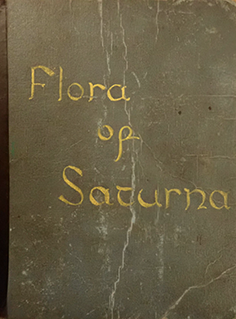
Plant observations from the Southern Gulf Islands, transcribed from Harvey Janszen’s field journal of 1973–1980 through the Janszen Legacy Project. Records transcribed by Cindy Gao and Robin Bradley through the Living Data Project of the Canadian Institute of Ecology and Evolution and available on Canadensys. Read the stories behind this work: 2023, 2025.


The Southern Gulf Islands are located within the shared, asserted, and unceded traditional territories of the Pune’luxutth’, Quw’utsun’, Lamalchi, W̱SÁNEĆ, Hul’q’umi’num’ and SENĆOŦEN-speaking people, and on the territories of the Coast Salish people of these islands. The islands also lie within the shared, asserted, and ceded traditional territories of the Tsawwassen First Nation. These nations, along with other Hwulmuhw Mustimuhw, continue to serve as the stewards of these lands and waters, having held rights and responsibilities here since time immemorial.
Harvey Janszen’s field journal (1997–1999) 600 records
Plant observations from Texada Island, transcribed from Harvey Janszen’s field journal of 1997–1999 through the Janszen Legacy Project. Records transcribed through the Living Data Project of the Canadian Institute of Ecology and Evolution and available on Canadensys. Read the stories behind this work: 2023, 2024.
Woodwardia fimbriata on Texada Island (1997) 22 records
Harvey Janszen’s 1997 survey assessing the status of the giant chain fern (Woodwardia fimbriata) on Texada Island. Records note the size and condition of each population, including sites since destroyed. Records transcribed through the Living Data Project of the Canadian Institute of Ecology and Evolution and available on Canadensys. Read the stories behind this work: 2023, 2024.
GPS coordinates predate May 2000, when the US military still degraded civilian GPS signals, and may be off by up to ~100 m.
Diatoms of the Salish Sea (1866–2026) 11,469 records
A catalogue of marine diatom occurrences across the Salish Sea, consolidating records from the published literature, morphological study of samples and molecular (DNA metabarcoding) surveys. Together, these records document the region’s diatom flora and how knowledge of it has accumulated since the first reports in 1866.
Data paper: Webber et al. (2026), Biodiversity Data Journal 14: e189060
The CSV is our curated dataset, combining our newly recorded data with records from GBIF. The GBIF dataset includes only the data generated through our research.